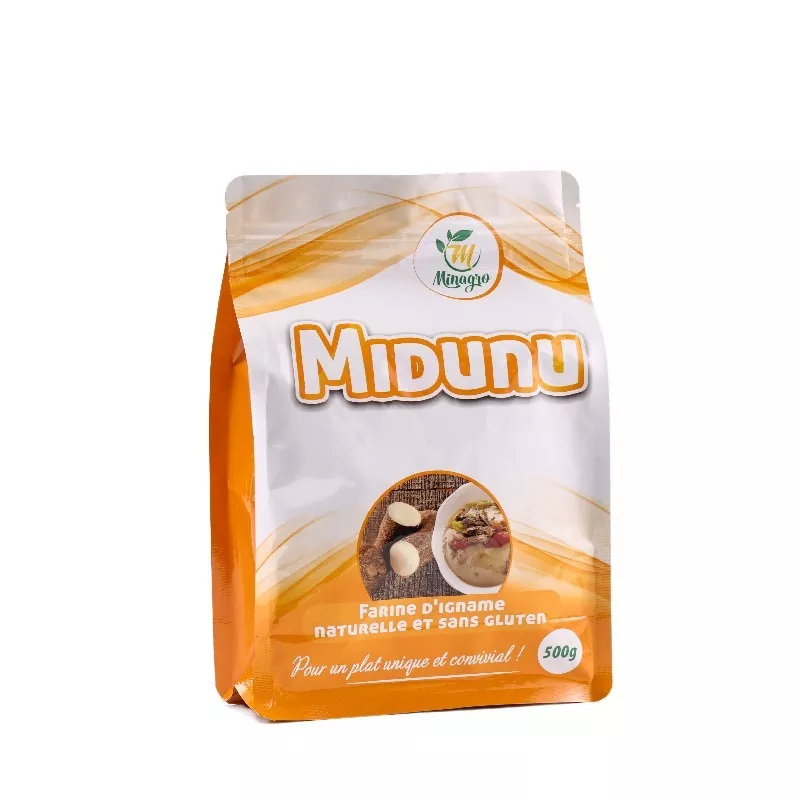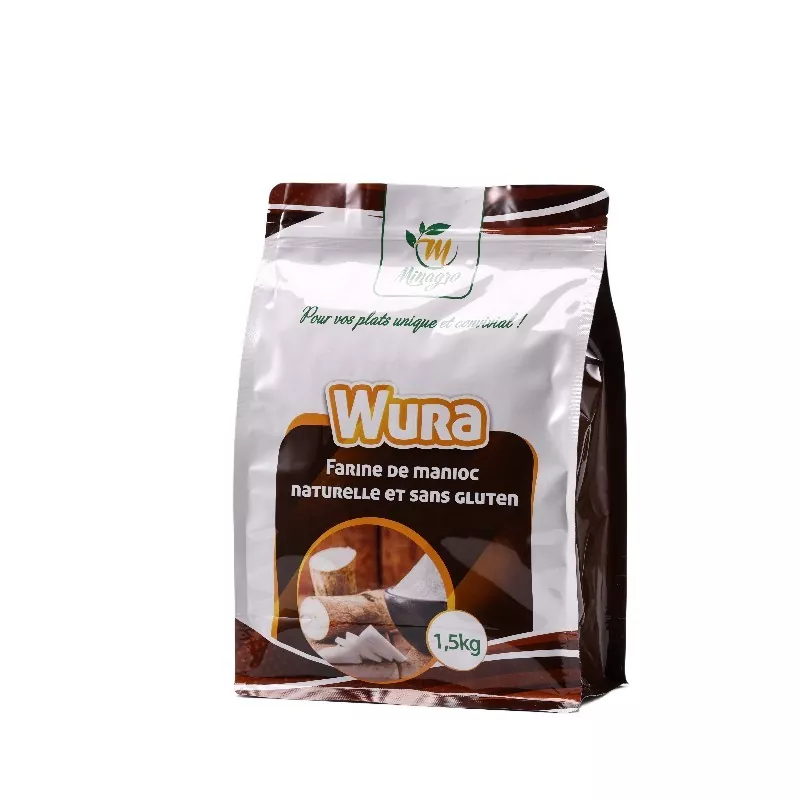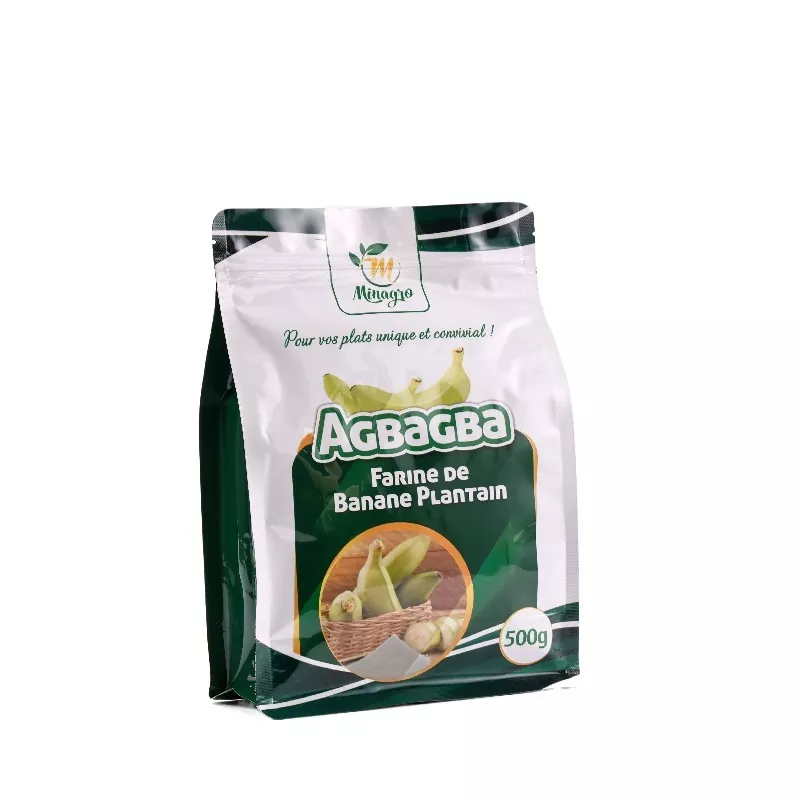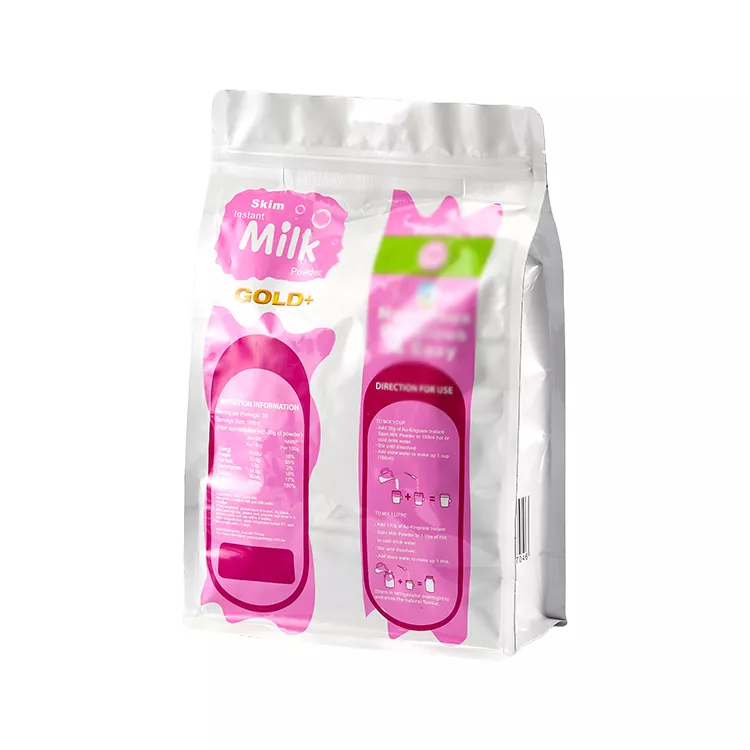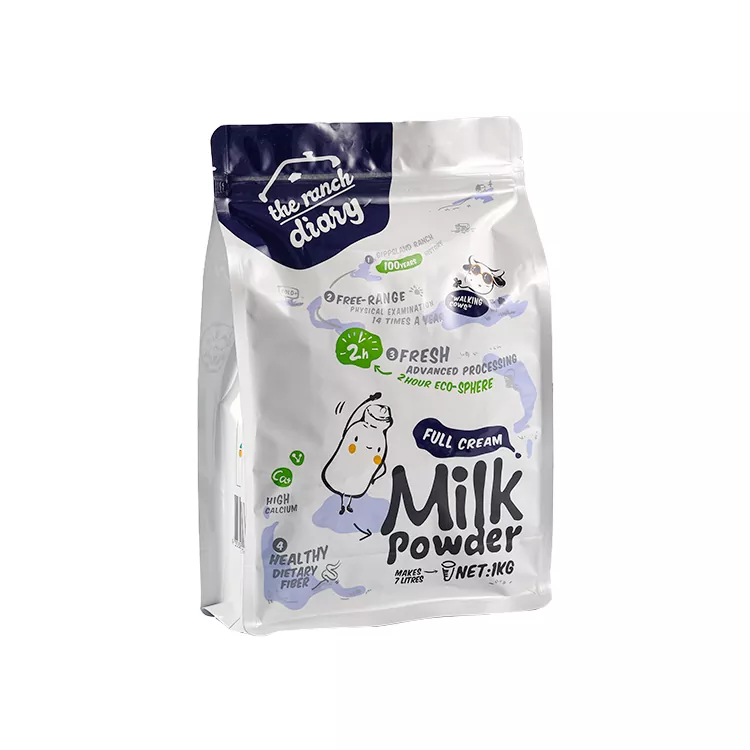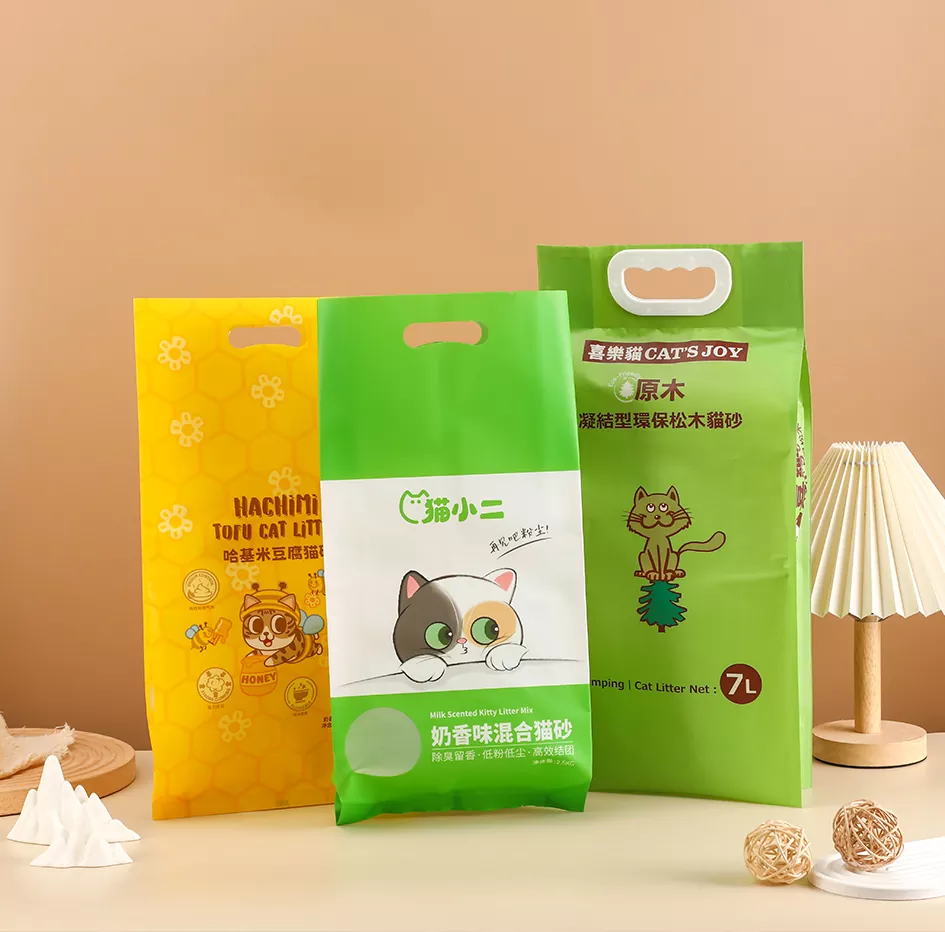
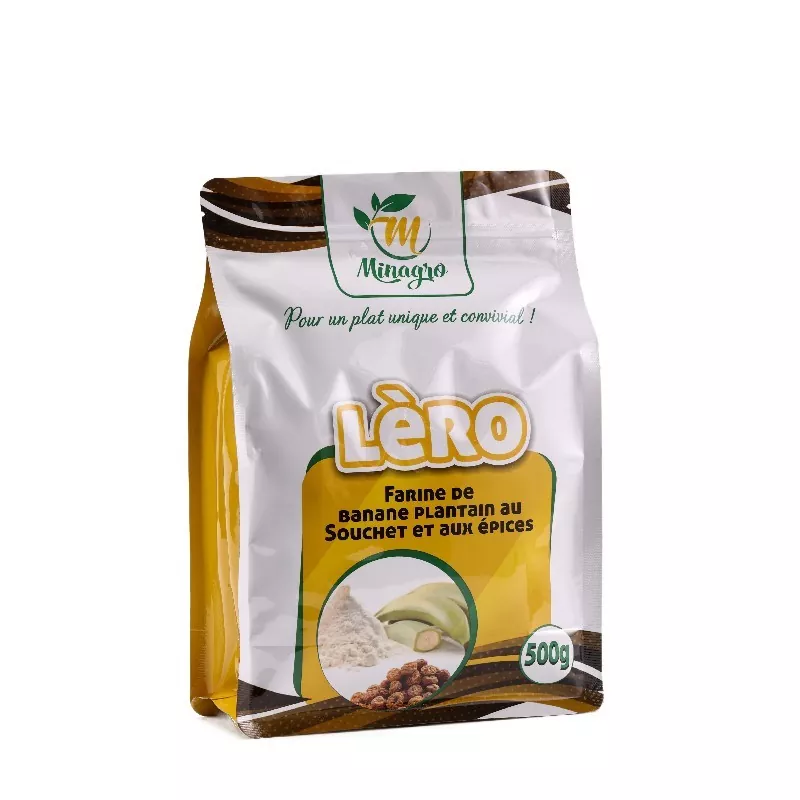
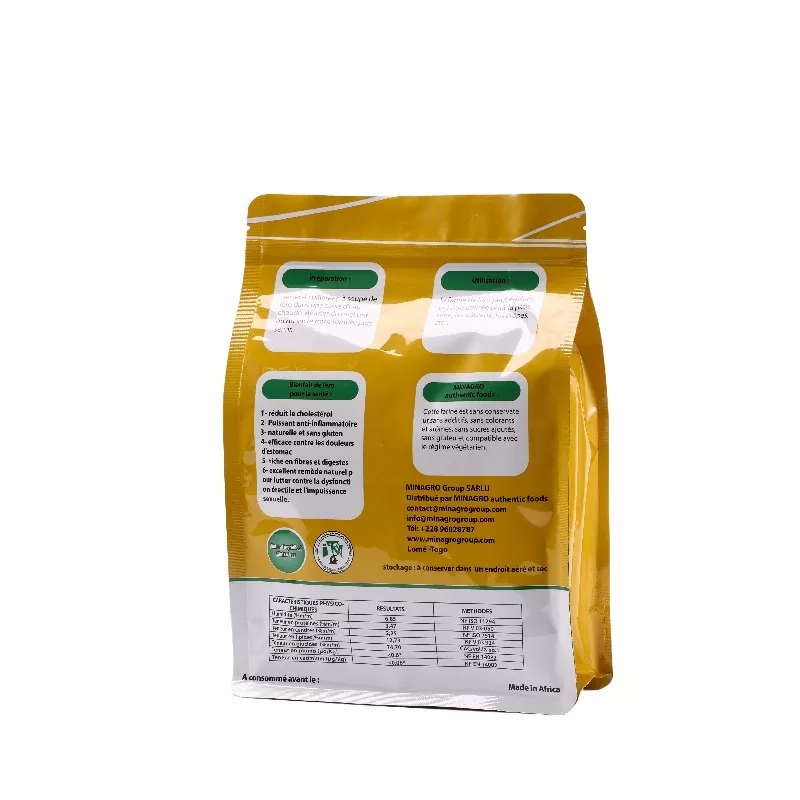
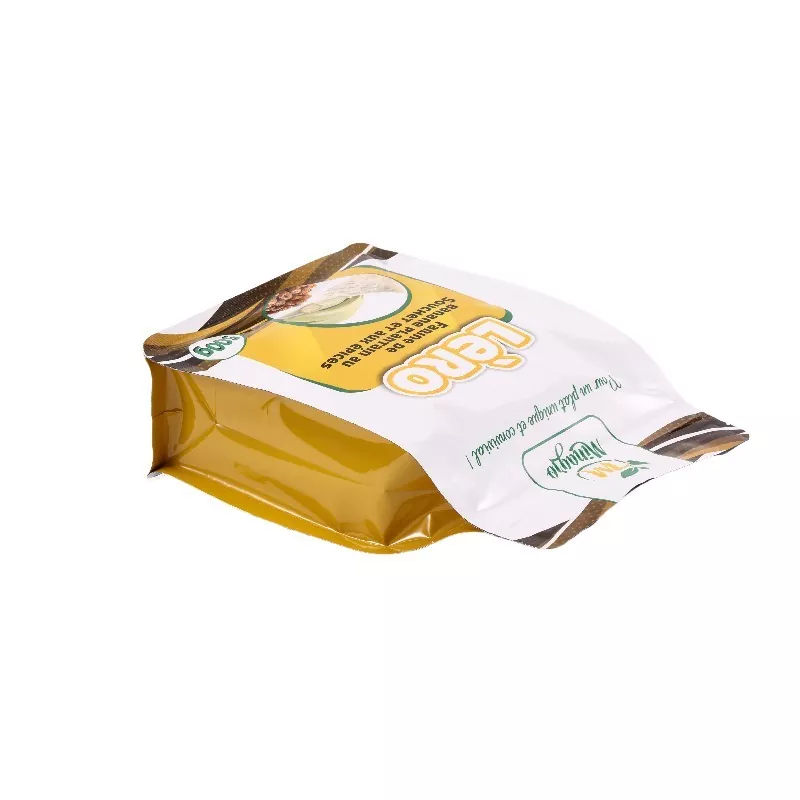
The China Food Flat Bottom Bag manufactured by Wanguang is designed for bulk powders, grains, and specialty agricultural ingredients. Its folded bottom creates a stable base, while the sealed side panels help distribute the contents evenly after filling.
The bag provides multiple printable panels for multilingual instructions, nutrition information, usage guidelines, and product origin details. Glossy laminated films and other material options are available to support different branding and packaging requirements.
Stable Flat Bottom Structure: The folded base helps the filled bag stand upright for storage and retail display.
Four-Side Sealing: The sealed structure supports bag stability and helps reduce bulging when the correct size and material are selected.
Optional Slider Zipper: A resealable slider zipper can be added for convenient opening and repeated closing.
Large Printing Area: Multiple panels provide space for product information, brand graphics, and multilingual labels.
Adjustable Barrier Performance: Film structures can be selected according to the product's moisture, oxygen, and light protection requirements.
Filling Equipment Options: Bag dimensions and opening designs can be evaluated for use with semi-automatic or automatic filling lines.
Food-Contact Material Options: Inner-layer materials can be selected according to applicable food-contact requirements.
This Food Flat Bottom Bag is suitable for a range of dry food and agricultural products, including:
Banana powder and cassava flour
Grain powder and mixed grains
Spice blends and seasoning powders
Dried agricultural ingredients
Specialty agricultural products
Imported and export-oriented prepackaged foods
The material structure should be selected according to the product's characteristics, storage conditions, and intended shelf life.
Provide vector artwork for clear printing. Keep text, barcodes, and certification marks away from sealing edges and folded areas to maintain readability.
Available options may include standard laminated films, high-barrier laminates, and glossy-finish materials. The final structure should match the product's protection needs and expected storage or shipping conditions.
Choose optional features such as:
Slider or press-to-close zipper
Easy-tear opening
Hanging holes
For fine powders, zipper and sealing designs should be evaluated through sample testing.
Bag width, height, and bottom gusset can be adjusted to suit the required filling weight. Fine powders may require additional attention to sealing width and filling clearance.
English, French, and other language versions can be arranged in one design or across different product versions. Customers should provide approved label content for final proofreading and compliance review.
Store empty bags in a dry, clean warehouse away from direct sunlight.
During filling, control powder flow to keep the sealing area clean.
Avoid excessive stacking pressure on filled bags.
This packaging is intended for dry food at room temperature. It is not designed for boiling or high-temperature retort processing unless specifically developed and validated for those conditions.
The sealing width, film structure, and heat-sealing settings can be adjusted for fine powder products. Proper filling conditions and sample testing are also important to reduce the risk of powder contamination in the seal area.
Yes. Bilingual or multilingual artwork can be arranged. The customer should confirm the required language, label information, and destination-market regulations before mass production.
A suitable protective surface layer or finishing option can help reduce abrasion during normal handling. For long-distance transportation, the surface finish should be evaluated under the expected packing and shipping conditions.
Both pouch types use established flexible packaging processes. Actual lead time depends on order quantity, material availability, printing requirements, and whether new tooling is needed.
Yes. Aluminum-free high-barrier laminate options can be evaluated for suitable products. The selected structure should be checked for barrier performance, recyclability claims, and compatibility with the destination market's packaging requirements.
Address
Xin'ou Micro Park, Lingxi Town, Cangnan County, Wenzhou City, Zhejiang Province, China
Tel
Get packing insights or pricing: Leave your email below, and we’ll reach out promptly (within 24 hrs).